


From time to time, we notice that our neighbor in the adjacent apartment has opened a water fitting by the humming sound it produces. Indeed, some sanitary fittings generate a significant level of noise during water flow. In this article, we will examine the causes of this phenomenon and the reasons why the noise spreads to neighboring apartments once it occurs.
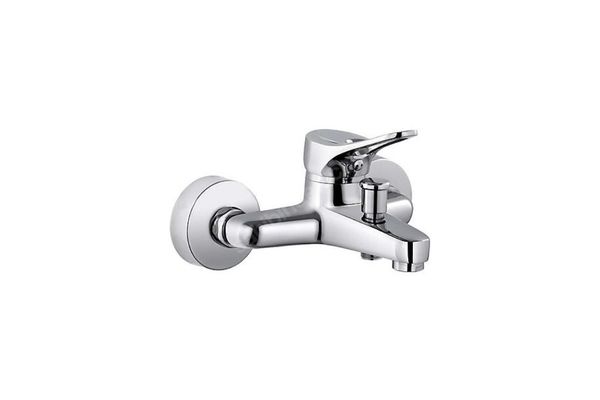
Among the important parameters related to sanitary fittings, the noise level of the fitting should also be considered. This noise (humming) that occurs during water flow from a sanitary fitting can become particularly noticeable late at night and, when it occurs, can reach levels that disturb neighbors in adjacent apartments.
PHYSICAL CONDITION ANALYSIS:
Now, let us take a closer look at the physical reasons that cause noise inside the sanitary fitting. Water reaching the connection points of the sanitary fitting through the pipes in the wall is exposed to various turns, impacts, and friction during its flow inside the body and components of the fitting. All these phenomena disturb the laminar flow of water and cause turbulent flow. This turbulence, in turn, causes noise. To minimize the noise level, the product body must be well designed during the design stage and the components used in the product must be carefully selected.
Because during water flow, turbulence occurs inside the fitting due to friction and collisions. This turbulence results in vibrations and noise, which are transmitted to the environment through the pipes and walls.
As can be seen in Figure 1, the water flowing inside a bath shower mixer makes about 7–8 turns of 90° depending on the product design. Each of these turns causes turbulence, leading to noise. Moreover, if the inner surfaces of the body are rough, or if burrs form at certain points during machining, these factors will further increase the noise level. The design and production quality of eccentric elbows, cartridges, diverters, and similar components inside the product are other factors affecting this formation.
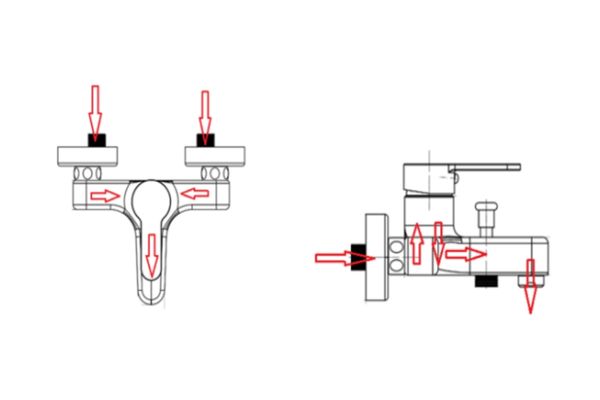 FIGURE 1
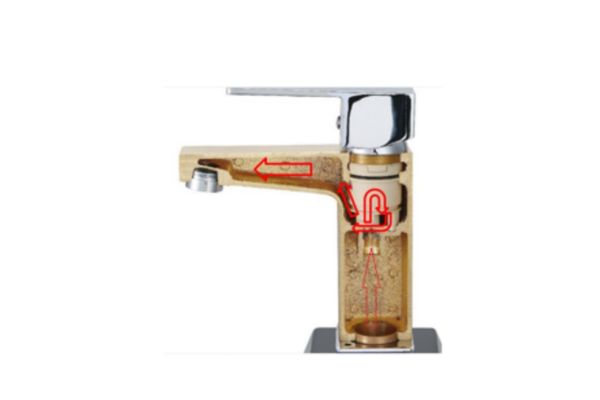 FIGURE 2
As shown in Figure 2, although the number of turns of water inside the body is relatively fewer in basin fittings, the fact that the water passes through narrower sections increases friction with the walls. Both the turns of the water inside the body and this friction cause unwanted noise.
To reduce the noise generated by the water fitting, certain hydraulic principles must be taken into account during its production. Accordingly, the number of sharp turns inside the body and components should be reduced, or the inner structure of the body should be designed to allow smoother turns. The roughness of inner surfaces should be minimized, unnecessary inner voids that create turbulence should be avoided, and sudden and large changes in cross-sectional areas should be prevented by ensuring gradual transitions.
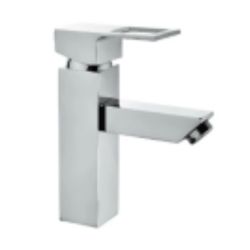
Another point to consider in terms of noise prevention is the form of the product. If the product is designed with sharp lines, the inner structure of the body will also consist of sharp lines parallel to the outer form, leading to sudden turns of water inside the body and generating noise.
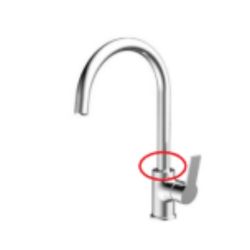
Another noise source is the spout connection points in products with body. The form of the intermediate nipple used to connect the body to the spout is important in terms of noise formation. By giving appropriate angles to the water inlet and outlet sides of the nipple, turbulence at these points can be prevented.
Since the 1990s, the increasing use of single-lever mixer taps has improved ease of use but unfortunately also increased noise levels. In these mixer taps, water is shut off suddenly, and this sudden stop in water flow causes a water hammer effect in the installation pipes. In products with double handles and sealing gaskets, opening and closing occur more gradually, and thus the water hammer effect is much lower. (Figure 3)
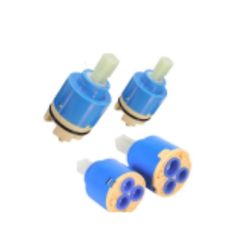 Seramik diskli kartuş
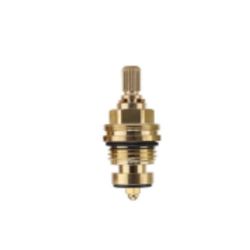 Contalı salmastra grubu
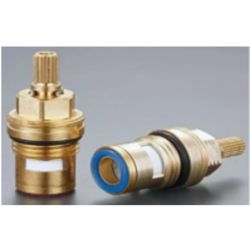 Seramik diskli salmastra grubu
FIGURE 3
The manufacturing quality of the cartridge used in single-lever mixer taps is also important. Some companies specially design the shape of the ceramic discs inside the cartridge so that the water flow is cut off more gradually, thereby reducing the water hammer effect to some extent.
Today, flow rate and acoustic (noise) tests of water fittings are carried out at 3 bar pressure, as specified in TS EN 200 and TS EN 817 European standards. According to hydraulic principles, the greater the amount and speed of water passing through a sanitary fitting, the higher the noise level. The increase in water amount and speed is directly related to the installation pressure. In other words, as pressure increases, noise levels also increase.
It is useful to clarify one more point here. Although the European standards (EN) for sanitary fittings, which came into effect in our country since 2000, state the operating range as 0 to 10 bar, values above 5 bar are specified as valid only for exceptional cases. The region above 5 bar should not be used continuously. Continuous pressure above 5 bar at the usage point will increase noise levels and, in the long run, cause failures in all water-operated devices, especially the water fittings. It should be remembered that the European standards specify 3 bar as the nominal operating and testing pressure.
On the other hand, the structure of the product also has a significant impact on noise levels. While noise levels in washbasin and kitchen fittings are usually measured in the 0–30 dB range, those in bath fittings can range between 0 and 45 dB, easily exceeding 30 dB. Sensitive manufacturers produce lower-noise products through special research and practices. With such efforts, washbasin and kitchen fittings can be produced with noise levels below 20 dB, while bath fittings can be made to generate less than 30 dB.
Both TS EN 200 (double-handle fittings) and TS EN 817 (single-lever fittings) refer to EN ISO 3822 for measuring the noise level of water fittings. This standard requires a silent room and a pipe system fixed to the wall of this room as part of the test laboratory. Subsequently, the noise reflected from the fitting into the pipe and then into the silent room is measured with a microphone inside the silent room.
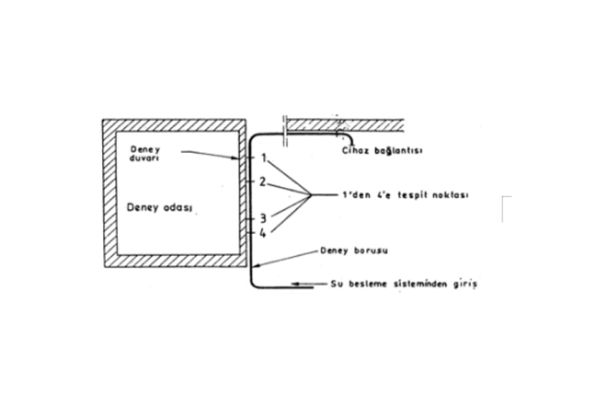
According to the results of the measurement, the noise levels of water fittings are determined and marked on the product. In both EN200 and EN817, as well as other standards such as EN1112 (shower systems) and EN14055 (concealed cisterns), products are classified into three categories in terms of noise:
Group 1: noise level 0–20 dB
Group 2: noise level 20–30 dB
Products with noise levels above 30 dB are defined as out-of-class products.
Since mandatory standard application has been removed within the framework of EU harmonization, companies now position themselves according to their own quality policies.
On the other hand, preventing the spread of noise inside the water fitting is as important as preventing its occurrence. Noise generated inside the fitting spreads not only into the immediate environment but also through the connected pipes into the walls and from there into neighboring spaces. Since this falls under the subject of mechanical installation, we will only make a few brief reminders here.
Recommendations
From the installation perspective :
From the water fitting perspective :


