


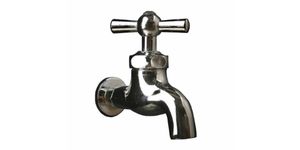
The first luminaire standard published in our country It is a standard called TS6 Faucets and was introduced in 1961. Based on German DIN standards prepared and published into force has entered.
This is standard, taps only Related to (long, short and laundry taps) over time because it contains provisions It was inadequate and in 1976 TS325 The standard named Batteries has been published. Under today's conditions, only two flywheels mixing following the standard that defines the products A few statements about batteries have been added. Depending on the developing conditions of the day, TS6 standard 13 times, TS325 standard 6 times has been revised.
At the end of the 90s, EU countries started to work on common implementation in technical legislation. have started and instead of the standards that were previously applied separately in each country, EN (European Standards) Norm) standards were prepared and started to be put into effect gradually. This is our country too has not stayed away from the studies and has been working with sanitary fittings within the framework of harmonization studies with the EU technical acquis. The relevant EN standards were translated verbatim and started to be published as TS standards. Especially As EU harmonization efforts gained momentum in 2002, EN standards on the subject were also introduced. has been put into effect in our country.
The main standards currently in force and determining the products in the industry are:
Since this article deals with standards related to water fixtures, standards other than TS EN 200 and TS EN 817 standards will not be mentioned.
TS EN 817 and TS EN 200 standards, which are the two standards that determine the sector, were adopted by EN in 1997. They were translated verbatim from the standards and published and became the Turkish standard. These two standards became mandatory standards after the TS6 and TS325 standards were canceled in 2001. have been put into practice. However, within the framework of compliance with the EU acquis, in 2010 Compulsory practices were abolished and standards began to be implemented on a voluntary basis.
Now let's take a closer look at these two main standards and the provisions they contain:
It covers single-control (mixed) fixtures. It has significant differences with the TS 325 standard it replaces. has. First of all, there are many differences in size. TS 325 on/off Detailed measurements appear on many issues such as the slot dimensions of the mechanism, body wall thickness, etc. T.S. The EN 817 standard leaves the manufacturer completely free at these points to install the luminaires in the wall installation. It prioritizes the sink and sink connection dimensions and tries to standardize these dimensions. This With this approach, in the standards related to sinks and sinks, the sanitary fittings connection on the sink and sink is also Parallel measurements are also given in the details.
Article 5.2 of the standard refers to TS EN 248 regarding the surface coatings applied to the fixtures. refers to the standard. TS EN 248 standard is applied to metallic coated parts. It describes the corrosion tests to be applied. The point that draws attention here is that the old TS and DIN Although certain coating thickness values are given for surface coatings in TS EN standards, 817 and TS EN 248 have removed this requirement. In the new approach, coating instead of thickness requirement It is aimed to highlight the performance of the new developments in coating The aim of adapting to technologies is taken into consideration.
The second important difference between the two standards is regarding the luminaire opening and closing mechanisms. can be seen. TS 325 was prepared based on double flywheel products in accordance with the conditions of the time. However, with the widespread use of single-control luminaires, the standard was revised and the luminaire was The provision that it can also be produced with a single remote control has been added to the standard. However, TS 325 does not include this provision. On the other hand, it did not make much provision regarding single-control batteries.
However, TS EN 817 is completely single-controlled. prepared for the products. Therefore and some detailed information about such mechanisms. Describes tests. First of all, turn on and off mechanism (cartridge) life test is quite It is a detailed experiment. In this experiment, the sanitary fittings is special on/off by connecting to a test machine It has a special mechanism consisting of 11 movements. Turn and apply 70 000 times.
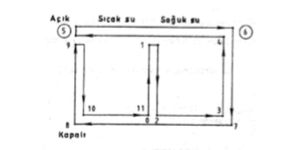
During this cycle, the cartridge is made with 3 opening and closing movements and 5 lateral movements. is applied. Therefore, the cartridge is opened and closed 3x70 000 = 210 000 times during the test. Opening The moment required to move the closing lever must not exceed 3 Nm at any time during the test. At the end of this cycle test, the sanitary fittings was subjected to leakage test and cross flow test at 16 bar, 4 bar pressure. He/she is subjected to tests and asked to pass the tests successfully.
Another test regarding the opening and closing mechanism, that is, the cartridge, is the mechanical durability test. Since cartridges are mostly produced from plastic material, the mechanical properties of the plastic material The strength must meet a certain value. For this purpose, a 6 Nm pressure was applied to the cartridge. torque is applied.
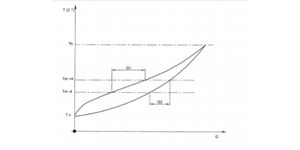
The important changes brought by the TS EN 817 standard One of the changes is the temperature of the cartridge. It is a provision to control the sensitivity. Article 10.7 of the standard describes this test in detail. describes it as. cartridge with this experiment in the design and manufacturing stages Movement caused by gaps that may occur imbalance is examined. On/off handle With a small movement, the inside of the cartridge water depending on the gaps of the parts temperature suddenly and significantly should not change. Don't run away for this purpose closing lever from fully cold position 34 °C, 38 °C, 44 °C and going to full hot position Their displacements during operation are calculated. Then the same movement
from the full hot position same during transition to full cold position calculate displacements in degrees is repeated as follows. Back with the movement of the arm certain degrees during the rotation movement. displacements are close to each other It is required by the standard.
TS EN 817 standard adds a new sealing test to the old standard sealing tests. : Cross flow test. With this test, the water resistance between the hot water and cold water compartments is determined. Leaks are controlled.
Article 12.2 of the TS EN 817 standard requires 30 000 reversing mechanisms of bathroom fixtures. While describing the life test with multiple movements, article 12.3 refers to pipes in sinks and kitchen fixtures. Defines life tests of output terminals. Depending on the pipe length, the pipe outlet ends should be placed in the water outlet mouth. By attaching a load of 1 kg or 2 kg, the pipe is moved left and right 80 000 times. Both direction changing and after the pipe outlet end life tests, 16 bar pressure is applied to the sanitary fittings. It should be checked that sealing is ensured
The most important test brought by the TS EN 817 standard is acoustic measurement. This test is part 14 of the standard. It is described in the article. Accordingly, the turbulence occurring in the internal structure of the sanitary fittings during water flow The noise level it creates is determined. According to this;
This standard can be called a combination of the previous standards TS 6 and TS 325. This standard is both It includes both taps and double-handle faucets.
TS EN 200 standard has the same approach as TS EN 817 standard in terms of dimensional properties is in. The most important difference of this standard is naturally the opening and closing mechanism (shaft seal).(group) is in the life test. This test, described in Article 12 of the standard, is carried out on the seal group. It was subjected to 200 000 closing movements and at the end of this test, sealing was achieved. predicts successful passing of the tests.
Leakage, flow measurement, diverter tests, pipe outlet end as defined in TS EN 200 standard tests, acoustic tests, etc. are exactly the same as TS EN 817.
Before examining other international standards, there is a problem we encounter in practice. I find it useful to point out this point as well. Compliance with the relevant product standards in our country When you want to get a certificate, all the tests required by the standard are carried out by TSE and Afterwards, the certificate of conformity to the standard is issued by TSE. In EU countries, various A company that has independent testing laboratories and wants to obtain a certificate of conformity to the standard By working with one of the laboratories, you can have all the tests required by the standard performed. Later, by applying to the certification body with the test reports received from this accredited test laboratory can obtain the certificate of conformity to the standard.
So far, we have discussed the luminaire standards applied in Türkiye and EU countries. Now The standard in the US market, which is another of the world's important sanitary fittings markets, Let's examine its applications.
The basic standard for water fixtures in the USA is ASME A112.18.1 standard. This standard is ASME (American Society of Mechanical Engineers) and CSA (Canada Standards Association) It was prepared jointly and is implemented in both the USA and Canada. Standard in Canada It is published and implemented under the number CSA B125.1.
Contrary to the practice in EU countries, this standard;
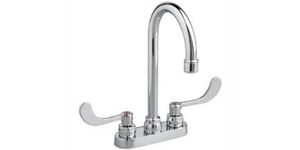
ASME A112.18 takes a very different approach to scope than EU standards. EU standard also applies to coatings applied to luminaires and tests related to coatings. It has much more detailed provisions than the standards. Applied on metal parts defining separate tests for coatings and coatings applied on plastic materials ASMEA112.18 standard;
The pressure resistance test defined in the A112.18 standard is more reliable than the standards of EU countries. It brings difficult conditions. Because in EU standards, this test is performed at 25 bar pressure, while ASME A112.18 The standard requires a value of 34.5 bar for this test.
Another difference between the two standards is related to flow rates. In EU countries standards While only the minimum value is specified for flow rates, ASME standard bathroom fixtures It indicates the minimum flow value and the maximum flow value for sink and sink fixtures. Standard, In sink fixtures used in public places (public institutions, shopping malls, stations, etc.) It gives a lower flow rate than the sink faucets used.
In ASME A112.18 standard life tests, 250 000 cycles for bathroom fixtures, sinks and For sink fixtures, it defines a test of 500 000 cycles. The cycle here is EU countries is different from the standard.
Article 5.9 of ASME A112.18 provides various information regarding backflow prevention systems and check valves. Contains provisions regarding tests. In the following articles, the connection of garden taps and sanitary fittings is discussed. Strength tests regarding the elements are described in detail.
Since ASME A 112.18 covers a wider group of fixtures, hand shower is included in article 5.12 of the standard. and tests on shower heads are included. Spiral kitchen mixer in kitchens in the USA Since its use is more common than in the EU, hand shower tests have an important place in the standard. It keeps.
Another important difference between the ASME A112.18 standard and EN 200 and EN 817 in EU countries is It is about measuring the noise levels (acoustics) of luminaires. In the standards of EU countries, this In addition to the subject existing, reference is made to the standard EN ISO 3822 and this standard is used for noise measurement. It describes a very detailed laboratory environment and equipment for USA and Canada There is no provision regarding noise measurement in the standards.


